Internationales Management beginnt dort, wo wirtschaftliche Entscheidungen auf kulturelle Wirklichkeiten treffen. Es beschäftigt sich mit den Spannungsfeldern, in denen unterschiedliche Werte, Denklogiken und Kommunikationsformen aufeinandertreffen – und fragt, wie Zusammenarbeit über Grenzen hinweg gelingen kann.
Im Zentrum steht nicht die Oberfläche kultureller Unterschiede, sondern ihre Struktur: jene tieferliegenden Muster von Wahrnehmung, Vertrauen und Motivation, die Organisationen verbinden oder trennen. Forschung in diesem Bereich zeigt, dass Erfolg im internationalen Kontext weniger von Strategien oder Strukturen abhängt als von der Fähigkeit, Komplexität zu verstehen und kulturelle Vielfalt als Ressource zu begreifen.
Internationales Management bedeutet, Systeme zu gestalten, die Verschiedenheit nicht glätten, sondern produktiv machen. Es geht um Führung, die kulturelle Identität achtet und zugleich gemeinsames Handeln ermöglicht – um die Kunst, Stabilität und Offenheit in Balance zu halten.
Relevante Inhalte
-

Participative and team-oriented leadership, countries’ education level and national innovation: The mediating role of economic factors and national cultural practices
-
Education, Leadership and Innovation: The Role of National Cultural Practices, Economic and Political Factors
-

Personality Profiles, Cultural Practices and Innovation: A Study of 33 Countries
-
Personality Profiles and National Innovativeness: The mediating role of cultural practices
-
Cultural Practices as a Mediator: Personality Profiles and Innovation in 33 countries
-

National culture and national innovation: An empirical analysis in 55 countries
-

Landeskultur und Landesinnovation
-
E-commerce in the gems and jewelry industry
-
Participative and team-oriented leadership, countries’ education level and national innovation: The mediating role of economic factors and national cultural practices
-
Education, Leadership and Innovation: The Role of National Cultural Practices, Economic and Political Factors
-
Personality profiles and national innovativeness: The mediating role of cultural practices
-

Gutachter: Cross Cultural Management – An International Journal (CCMIJ)
-

Kulturelle Orientierungen und Innovation in 41 Ländern: Eine Sekundäranalyse des Zusammenhanges der GLOBE-Dimensionen mit der Landesinnovativität.
-
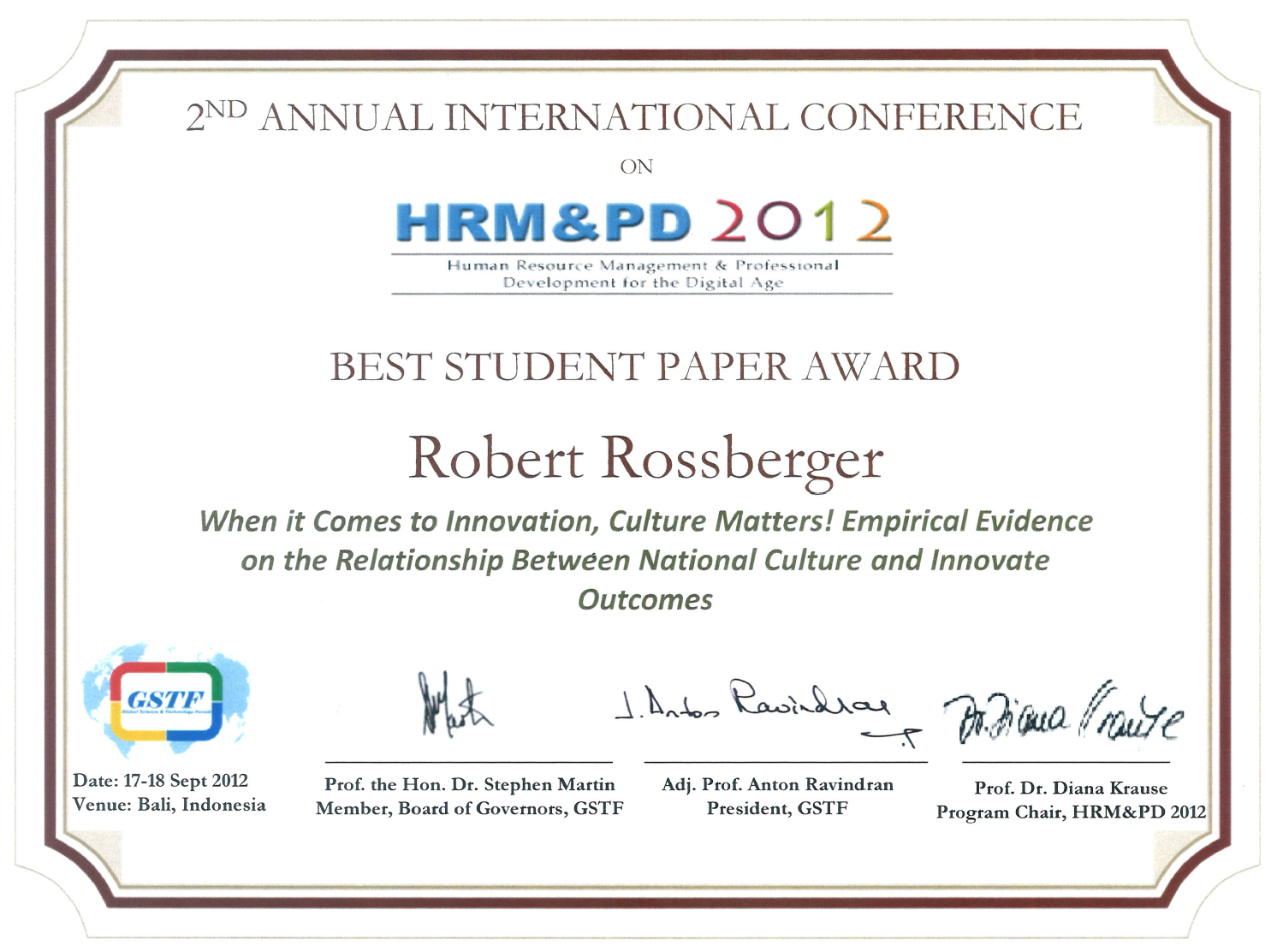
When it comes to innovation, culture matters. Empirical evidence on the relationship between national culture and innovative outcomes.
-
National culture, heterogeneity and innovation: New insights into the relationship between the GLOBE dimensions and national level innovation
-
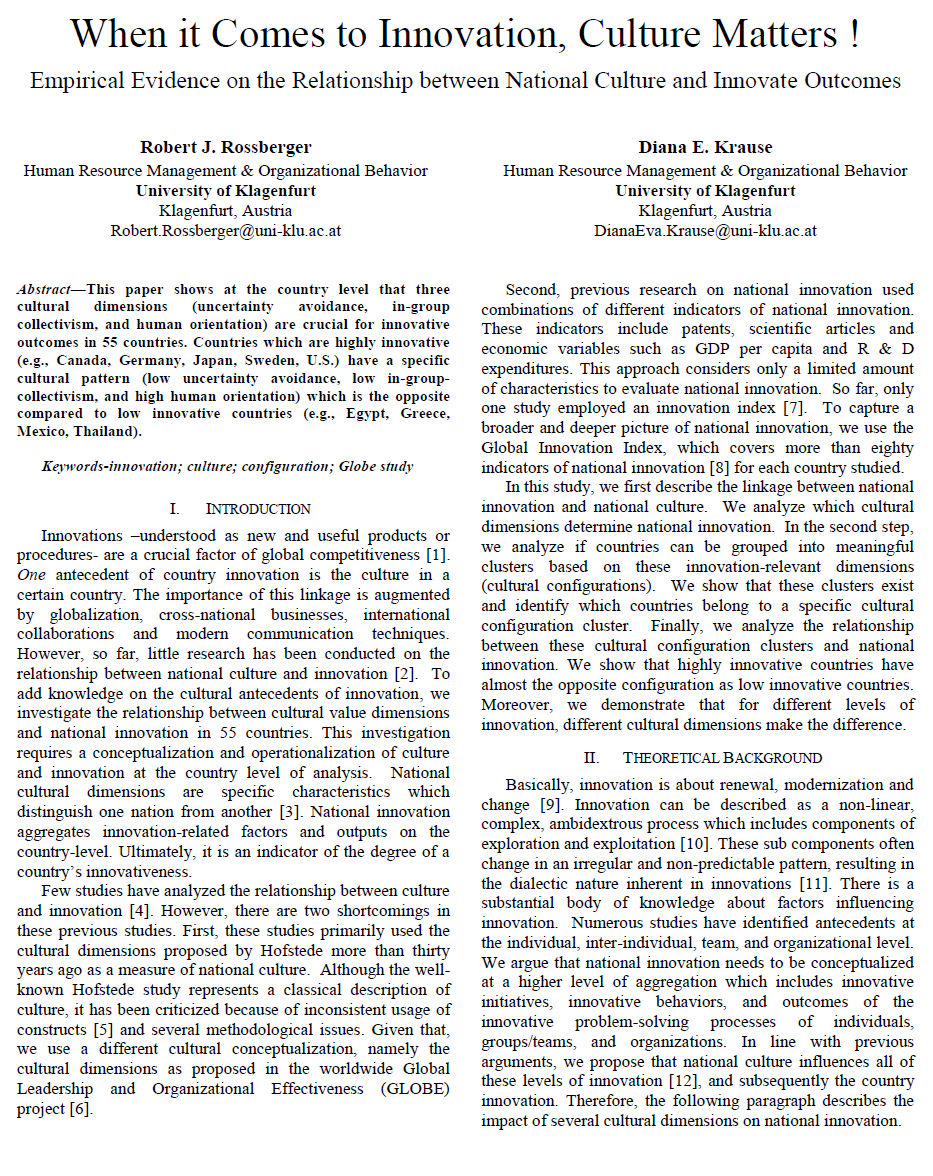
When it comes to innovation, culture matters: Empirical evidence on the relationship between national culture and innovative outcomes.
-
Kulturelle Orientierung und Innovation in 41 Ländern: Eine Sekundäranalyse zum Einfluss der GLOBE-Dimensionen auf die Landesinnovativität
-
Assessment centers in South Africa